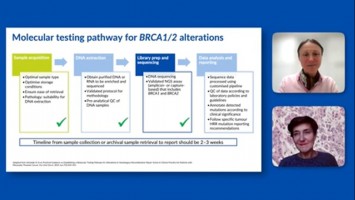
Part 4: Clinical decision making - Interpretation of next generation sequencing results
5 May 2026

Supporting oncology professionals through education
The content on this site is intended for healthcare professionals only
The content on this site is intended for healthcare professionals only
Part 4: Clinical decision making - Interpretation of next generation sequencing results

Screen-detectable cancers account for majority of early-onset cancer cases under age 50

Perioperative anti–PD-L1 therapy improves event-free survival in resectable NSCLC with ctDNA-based risk stratification
Machine learning models improve prediction of immunotherapy outcomes across multiple cancer types
Denikitug shows immune activation and early anti-tumour activity in advanced solid tumour
Zedoresertib plus lunresertib shows promising tumour shrinkage in CCNE1-amplified and FBXW7-mutant cancers
Dual integrin inhibitor plus pembrolizumab shows durable responses in ICI-resistant solid tumours
Oral molecular glue degrader with or without spartalizumab shows immune activation and tumour control in solid tumours
ctDNA positivity predicts poor response and recurrence risk in triple-negative breast cancer

Daraxonrasib plus chemotherapy shows promising first-line activity in RAS-mutant metastatic pancreatic cancer

ZL-1310 shows promising activity in DLL3-positive neuroendocrine carcinomas

DLL3 expression in circulating tumour cells predicts response to tarlatamab in small cell lung cancer